

2026 Ford Explorer vs. Competitors
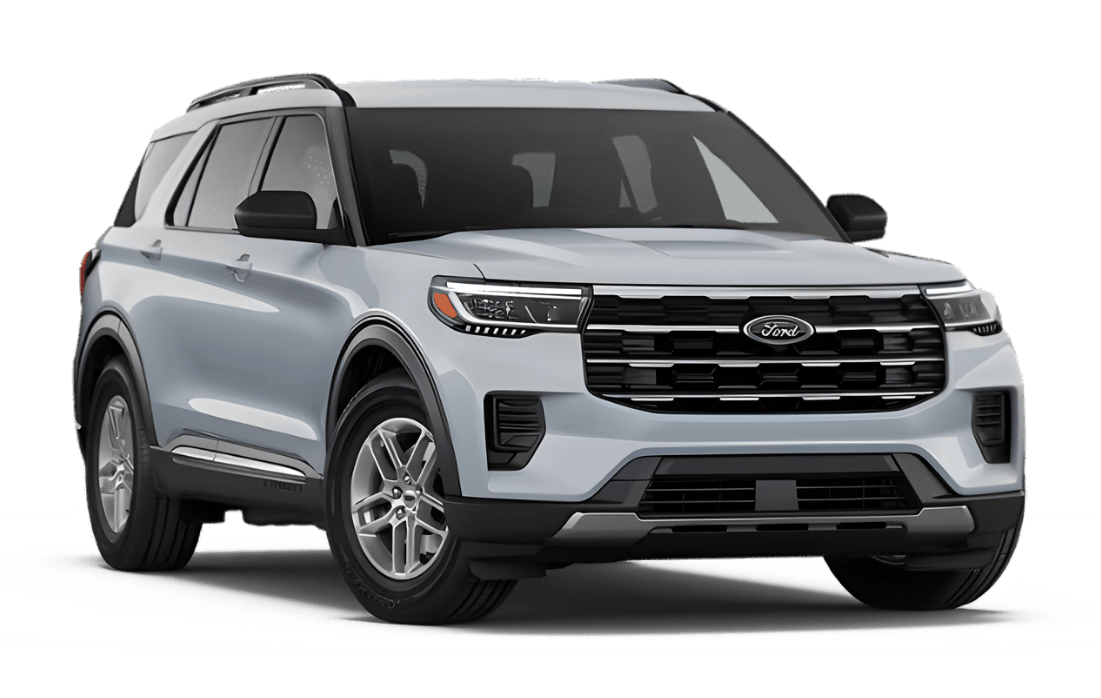
2026 Ford
Explorer vs. Competitors
When the Explorer debuted for the 1991 model year, the SUV market was just getting started. With its capability, spaciousness, and higher perch above the road, it was one of the pioneering models that helped to whet America’s appetite for family-friendly SUVs. All these years later, the Explorer is the country’s best-selling SUV of all time – but it’s far from the only midsized three-row utility vehicle on the market. We set out to see how well the stalwart Explorer can hold its own, now that it has an abundance of competitors. We’ll provide an answer by comparing the Ford Explorer against the Chevrolet Traverse, Toyota Highlander, and Volkswagen Atlas. Our matchup looks at base all-wheel-drive trims for the 2026 model year, unless we specify otherwise. To compare more like-priced models, however, we use the Active trim – the second-least expensive Explorer – as our default.
Shop Ford Explorer
Price
With a starting price of $42,485, the Explorer Active is the least expensive option among this group. The Atlas SE sits in second place, with a base MSRP of $42,685, followed by the Chevrolet Traverse LT, priced at $42,800. The Highlander XLE is the most expensive of this bunch, with a base price of $45,870. We should disclose that Toyota dropped the Highlander’s traditional base trim, the LE, for 2026, causing the lowest-cost Highlander to come with more standard features, such as a power sunroof. That said, adding options to the Explorer Active can still be more cost-effective. For example, Ford charges $1,695 for a panoramic fixed-glass roof with a power sunshade.
Cost of Ownership
There’s more to owning a vehicle than just focusing on the upfront purchase price. Understanding expenses like repairs and fuel can show how one model can inch ahead of the competition – and this is exactly the case with the Explorer. According to Edmunds' five-year ownership cost projections (based on 15,000 miles driven annually), the Explorer has an average operating and upkeep cost of $0.68 per mile. This calculation averages critical factors, including depreciation, insurance, maintenance, repairs, fuel, financing, taxes, and fees. In comparison, the Highlander and Atlas cost $0.70 per mile (we weren’t able to find this information for the Traverse).
Powertrains
In pursuit of great efficiency without sacrificing performance, many automakers have switched to turbocharged four-cylinder powerplants in their midsized three-row utilities. The Explorer, Traverse, Highlander, and Atlas all have this arrangement, with Ford’s 300-horsepower 2.3-liter unit offering greater output than Toyota’s 265-hp 2.4-liter and Volkswagen’s 269-hp 2.0-liter. Chevrolet’s 2.5-liter engine in the Traverse generates 325 horsepower. At the same time, the Explorer is the only model mentioned on this page that has a 10-speed automatic transmission, which helps with fuel economy and performance. The others use an eight-speed automatic gearbox.
Another way that the Explorer stands out in this comparison is that it’s the only one with an available engine upgrade. Ford’s twin-turbocharged 400-hp 3.0-liter V6 is optional on the Tremor and standard with the ST. In a declaration on this powerplant’s quality, Kelley Blue Book said, “It’s simply one of our favorite engines in this class.”
Since we mentioned the Explorer ST, we’ll add that none of the mentioned rival vehicles offers a performance variant. Besides the twin-turbo V6, this elevated Explorer gets a sport-tuned suspension, enhanced brakes, and a long list of standard equipment. In its testing of the specialized trim, Car and Driver recorded a 0-to-60 mph time of 5.1 seconds, which is an accomplishment usually reserved for SUVs in a higher-cost segment.
Professional Reviews
The professionals at Edmunds gave the Explorer an overall rating of 7.2 out of 10, compared to 6.7 for the Atlas. The Highlander and Traverse have scores of 6.4 and 6.3, respectively. The standout areas for the Explorer include driving experience and in-cabin tech.
Cabin Space
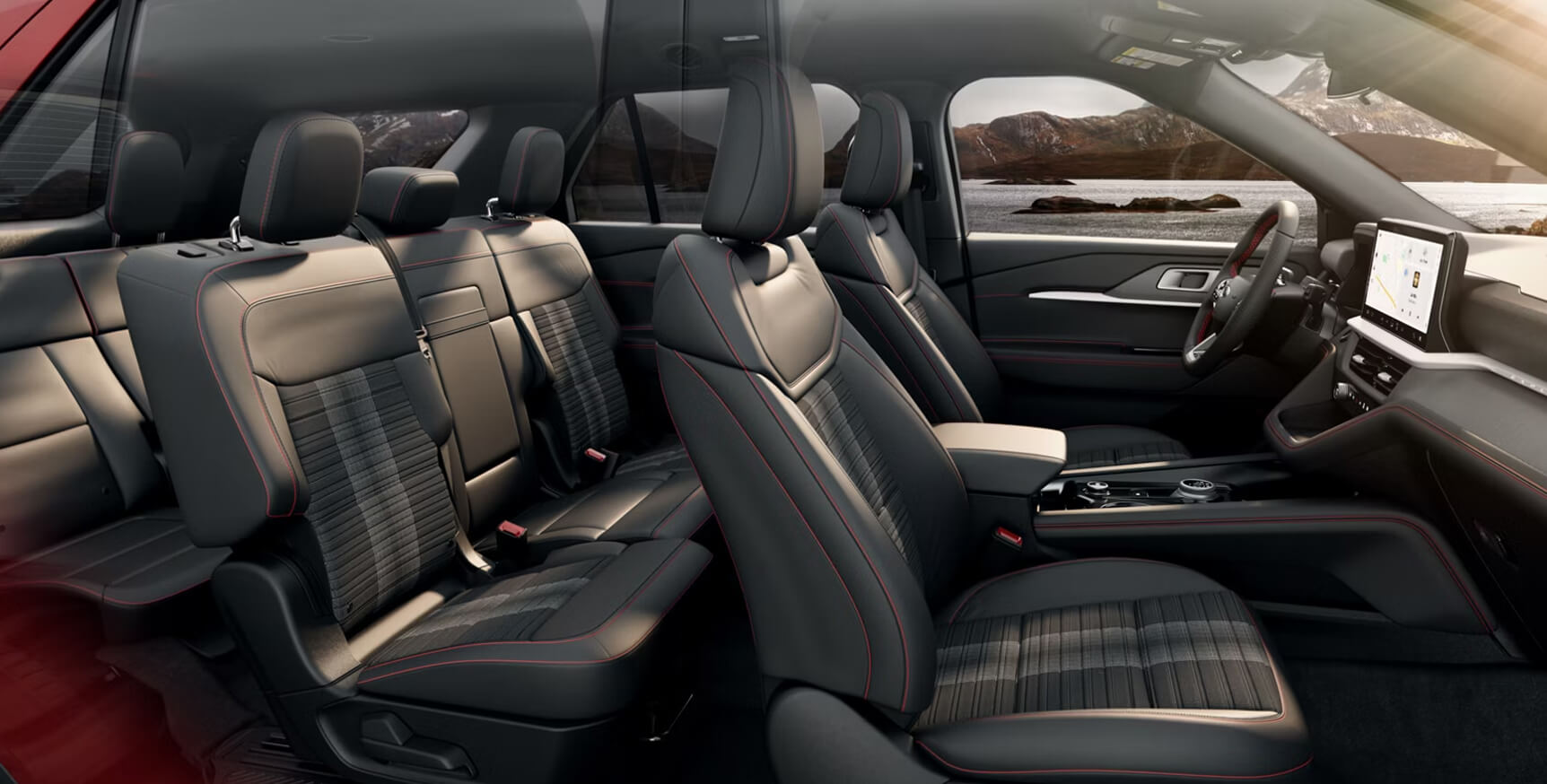
In terms of interior space, the Explorer outstretches its rivals in several crucial areas. With 43 inches of front legroom, the Explorer tops the Highlander (42 inches) and Atlas (41.7 inches). The Explorer also has greater second-row legroom (39 inches) than the Highlander (38.7 inches) and the Atlas (37.6 inches), and more maximum cargo space (85.8 cubic feet) than the Highlander (84.3 cubic feet).

May not represent actual vehicle. (Options, colors, trim and body style may vary)
MSRP is the Manufacturer's Suggested Retail Price of the vehicle. Dealer sets final price. Sales tax, title, and registration fees are not included in vehicle prices or manufacturer offers that appear on this site and must be paid by the purchaser. $784 doc & title prep fees apply to all vehicle sales, including manufacturer offers that may appear on this website. MPG ratings are EPA estimates. Actual results may vary for many reasons, including driving conditions and how you drive and maintain your vehicle. See full site disclosure here.